
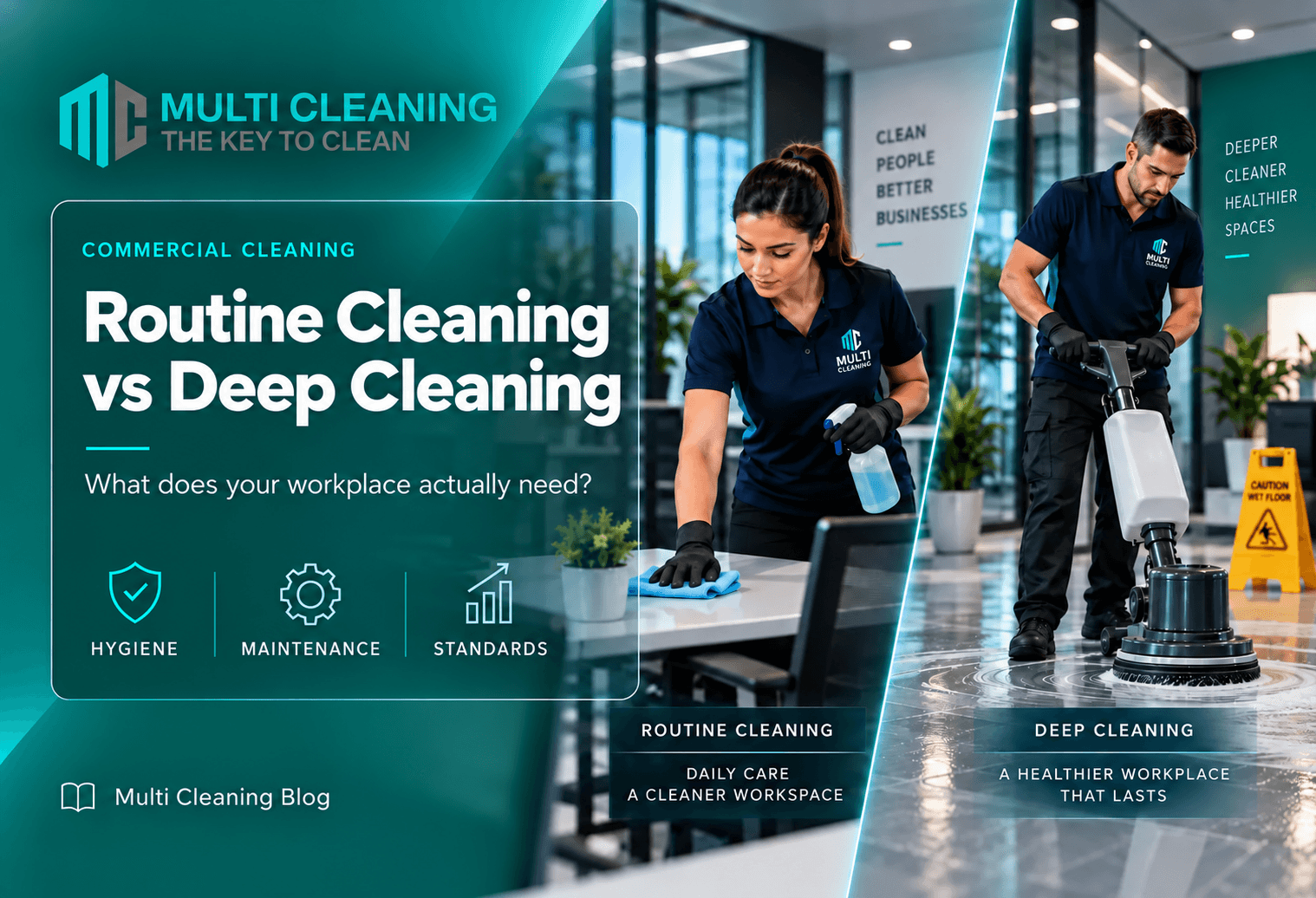
Cleanliness is one of those business functions that is most noticeable when it stops working. A well-maintained commercial environment feels ready for people: floors are presentable, shared spaces are usable, waste is under control, amenities are cared for and the small details do not distract from the work, service or learning happening in the building. For managers planning recurring and periodic cleaning, the more useful question is not simply whether cleaning happens. It is whether the cleaning program reliably supports a balanced program that protects daily presentation and prevents gradual build-up.
This article takes a practical approach to routine commercial cleaning vs deep cleaning: what does your workplace actually need?. Rather than treating cleaning as a long list of unrelated chores, it looks at scope, frequency, responsibilities, quality control and the way people actually use the space. That matters because two premises of the same size can create very different cleaning demand. Occupancy, visitor traffic, food activity, bathrooms, floor types, operating hours, weather and the layout of shared spaces all influence what needs attention and how often.
The aim is to help decision-makers build a routine that is clear enough to manage but flexible enough to change when the workplace changes. The result should not be an over-complicated program. It should be a dependable system: priority areas receive the right attention, lower-use tasks are rotated sensibly, problems are reported early and the cleaning provider has enough information to deliver the agreed standard.
Routine and deep cleaning solve different problems
Routine work protects the everyday standard; deep cleaning targets detail and build-up. This is important in commercial cleaning because the condition of a space changes according to how people use it, not according to how simple the cleaning schedule looks on paper. A task can be completed at the wrong frequency and still produce a poor result, while a smaller number of well-targeted tasks can maintain a strong standard when they are aligned with traffic and use. The practical objective is to understand the reason behind the task before deciding how much time or frequency it deserves.
A useful response is to define the purpose of each layer before scheduling it.. This turns a broad expectation into something a manager and cleaner can both understand. Examples include daily bathrooms and waste versus periodic intensive floor or glass work. The list will differ from site to site, but the principle is consistent: define the outcome, identify who is responsible and make sure the task can realistically be completed within the service window. If a task repeatedly falls behind, first check whether the scope, access, method or timing is wrong before assuming that the cleaner simply needs to work faster.
The best way to test this area is to observe it at more than one point in the week. A space may look excellent immediately after service but deteriorate long before the next visit. That indicates a frequency problem rather than necessarily a quality problem. The opposite can also occur: a low-use room may be receiving more attention than it needs. Moving time from low-impact work to a priority zone can improve the overall standard without automatically increasing the budget.
For Multi Cleaning clients, the commercial value of this approach is consistency. The service can be reviewed against a clear standard instead of a vague instruction to “do more”. Over time, the provider learns which parts of the premises change fastest and which tasks can rotate. That learning is what turns a cleaning contract into an operating routine that supports a balanced program that protects daily presentation and prevents gradual build-up.
What belongs in routine cleaning
Routine tasks are the activities that change quickly with occupancy. This is important in commercial cleaning because the condition of a space changes according to how people use it, not according to how simple the cleaning schedule looks on paper. A task can be completed at the wrong frequency and still produce a poor result, while a smaller number of well-targeted tasks can maintain a strong standard when they are aligned with traffic and use. The practical objective is to understand the reason behind the task before deciding how much time or frequency it deserves.
A useful response is to prioritise waste, amenities, food areas, touchpoints, accessible floors and presentation.. This turns a broad expectation into something a manager and cleaner can both understand. Examples include entry floors, kitchen benches and bathroom fixtures. The list will differ from site to site, but the principle is consistent: define the outcome, identify who is responsible and make sure the task can realistically be completed within the service window. If a task repeatedly falls behind, first check whether the scope, access, method or timing is wrong before assuming that the cleaner simply needs to work faster.
Documentation helps when it stays simple. Add the requirement to the site scope in plain language and include any special instructions that a replacement cleaner would need to know. This reduces dependence on memory and makes feedback fairer. If the same issue occurs again, the business can point to the agreed task and determine whether the solution is better access, a different method, additional frequency or a change in responsibility.
For Multi Cleaning clients, the commercial value of this approach is consistency. The service can be reviewed against a clear standard instead of a vague instruction to “do more”. Over time, the provider learns which parts of the premises change fastest and which tasks can rotate. That learning is what turns a cleaning contract into an operating routine that supports a balanced program that protects daily presentation and prevents gradual build-up.
What belongs in deep cleaning
Some tasks require extra time, equipment or access. This is important in commercial cleaning because the condition of a space changes according to how people use it, not according to how simple the cleaning schedule looks on paper. A task can be completed at the wrong frequency and still produce a poor result, while a smaller number of well-targeted tasks can maintain a strong standard when they are aligned with traffic and use. The practical objective is to understand the reason behind the task before deciding how much time or frequency it deserves.
A useful response is to schedule intensive detail separately rather than squeezing it into every visit.. This turns a broad expectation into something a manager and cleaner can both understand. Examples include carpet extraction, machine floor work, high dusting and detailed edges. The list will differ from site to site, but the principle is consistent: define the outcome, identify who is responsible and make sure the task can realistically be completed within the service window. If a task repeatedly falls behind, first check whether the scope, access, method or timing is wrong before assuming that the cleaner simply needs to work faster.
Managers should also distinguish between cleaning, housekeeping and maintenance. Cleaning removes soil and restores presentation; housekeeping may involve staff putting away personal or operational items; maintenance addresses damaged fixtures, leaks, worn finishes and other physical defects. When these categories are mixed together, cleaning teams can be blamed for conditions that more cleaning cannot solve, and real maintenance issues can remain unresolved.
For Multi Cleaning clients, the commercial value of this approach is consistency. The service can be reviewed against a clear standard instead of a vague instruction to “do more”. Over time, the provider learns which parts of the premises change fastest and which tasks can rotate. That learning is what turns a cleaning contract into an operating routine that supports a balanced program that protects daily presentation and prevents gradual build-up.
Use condition-based triggers
A fixed calendar is helpful, but visible condition can be more informative. This is important in commercial cleaning because the condition of a space changes according to how people use it, not according to how simple the cleaning schedule looks on paper. A task can be completed at the wrong frequency and still produce a poor result, while a smaller number of well-targeted tasks can maintain a strong standard when they are aligned with traffic and use. The practical objective is to understand the reason behind the task before deciding how much time or frequency it deserves.
A useful response is to watch for build-up, traffic lanes, persistent marks and post-event soil.. This turns a broad expectation into something a manager and cleaner can both understand. Examples include grout discolouration, floor edges and glass that stays marked. The list will differ from site to site, but the principle is consistent: define the outcome, identify who is responsible and make sure the task can realistically be completed within the service window. If a task repeatedly falls behind, first check whether the scope, access, method or timing is wrong before assuming that the cleaner simply needs to work faster.
The best way to test this area is to observe it at more than one point in the week. A space may look excellent immediately after service but deteriorate long before the next visit. That indicates a frequency problem rather than necessarily a quality problem. The opposite can also occur: a low-use room may be receiving more attention than it needs. Moving time from low-impact work to a priority zone can improve the overall standard without automatically increasing the budget.
For Multi Cleaning clients, the commercial value of this approach is consistency. The service can be reviewed against a clear standard instead of a vague instruction to “do more”. Over time, the provider learns which parts of the premises change fastest and which tasks can rotate. That learning is what turns a cleaning contract into an operating routine that supports a balanced program that protects daily presentation and prevents gradual build-up.
Avoid using deep cleans to fix a weak routine
Repeated rescue cleans are expensive if the normal schedule is under-designed. This is important in commercial cleaning because the condition of a space changes according to how people use it, not according to how simple the cleaning schedule looks on paper. A task can be completed at the wrong frequency and still produce a poor result, while a smaller number of well-targeted tasks can maintain a strong standard when they are aligned with traffic and use. The practical objective is to understand the reason behind the task before deciding how much time or frequency it deserves.
A useful response is to check daily frequency and methods before increasing deep-clean spend.. This turns a broad expectation into something a manager and cleaner can both understand. Examples include an entry that deteriorates every week needs a routine change. The list will differ from site to site, but the principle is consistent: define the outcome, identify who is responsible and make sure the task can realistically be completed within the service window. If a task repeatedly falls behind, first check whether the scope, access, method or timing is wrong before assuming that the cleaner simply needs to work faster.
Documentation helps when it stays simple. Add the requirement to the site scope in plain language and include any special instructions that a replacement cleaner would need to know. This reduces dependence on memory and makes feedback fairer. If the same issue occurs again, the business can point to the agreed task and determine whether the solution is better access, a different method, additional frequency or a change in responsibility.
For Multi Cleaning clients, the commercial value of this approach is consistency. The service can be reviewed against a clear standard instead of a vague instruction to “do more”. Over time, the provider learns which parts of the premises change fastest and which tasks can rotate. That learning is what turns a cleaning contract into an operating routine that supports a balanced program that protects daily presentation and prevents gradual build-up.
Plan around access and drying time
Intensive work can disrupt operations if it is poorly scheduled. This is important in commercial cleaning because the condition of a space changes according to how people use it, not according to how simple the cleaning schedule looks on paper. A task can be completed at the wrong frequency and still produce a poor result, while a smaller number of well-targeted tasks can maintain a strong standard when they are aligned with traffic and use. The practical objective is to understand the reason behind the task before deciding how much time or frequency it deserves.
A useful response is to complete work after hours, in sections or on quieter days where appropriate.. This turns a broad expectation into something a manager and cleaner can both understand. Examples include wet floor processes, furniture movement and machinery. The list will differ from site to site, but the principle is consistent: define the outcome, identify who is responsible and make sure the task can realistically be completed within the service window. If a task repeatedly falls behind, first check whether the scope, access, method or timing is wrong before assuming that the cleaner simply needs to work faster.
Managers should also distinguish between cleaning, housekeeping and maintenance. Cleaning removes soil and restores presentation; housekeeping may involve staff putting away personal or operational items; maintenance addresses damaged fixtures, leaks, worn finishes and other physical defects. When these categories are mixed together, cleaning teams can be blamed for conditions that more cleaning cannot solve, and real maintenance issues can remain unresolved.
For Multi Cleaning clients, the commercial value of this approach is consistency. The service can be reviewed against a clear standard instead of a vague instruction to “do more”. Over time, the provider learns which parts of the premises change fastest and which tasks can rotate. That learning is what turns a cleaning contract into an operating routine that supports a balanced program that protects daily presentation and prevents gradual build-up.
Set realistic outcomes
Cleaning cannot reverse permanent wear or material damage. This is important in commercial cleaning because the condition of a space changes according to how people use it, not according to how simple the cleaning schedule looks on paper. A task can be completed at the wrong frequency and still produce a poor result, while a smaller number of well-targeted tasks can maintain a strong standard when they are aligned with traffic and use. The practical objective is to understand the reason behind the task before deciding how much time or frequency it deserves.
A useful response is to agree what can be improved and what requires maintenance or restoration.. This turns a broad expectation into something a manager and cleaner can both understand. Examples include worn carpet, damaged grout and scratched surfaces. The list will differ from site to site, but the principle is consistent: define the outcome, identify who is responsible and make sure the task can realistically be completed within the service window. If a task repeatedly falls behind, first check whether the scope, access, method or timing is wrong before assuming that the cleaner simply needs to work faster.
The best way to test this area is to observe it at more than one point in the week. A space may look excellent immediately after service but deteriorate long before the next visit. That indicates a frequency problem rather than necessarily a quality problem. The opposite can also occur: a low-use room may be receiving more attention than it needs. Moving time from low-impact work to a priority zone can improve the overall standard without automatically increasing the budget.
For Multi Cleaning clients, the commercial value of this approach is consistency. The service can be reviewed against a clear standard instead of a vague instruction to “do more”. Over time, the provider learns which parts of the premises change fastest and which tasks can rotate. That learning is what turns a cleaning contract into an operating routine that supports a balanced program that protects daily presentation and prevents gradual build-up.
Connect periodic findings back to routine service
Deep cleaning can reveal where the recurring plan needs improvement. This is important in commercial cleaning because the condition of a space changes according to how people use it, not according to how simple the cleaning schedule looks on paper. A task can be completed at the wrong frequency and still produce a poor result, while a smaller number of well-targeted tasks can maintain a strong standard when they are aligned with traffic and use. The practical objective is to understand the reason behind the task before deciding how much time or frequency it deserves.
A useful response is to use findings to change frequencies, soil control or rotating tasks.. This turns a broad expectation into something a manager and cleaner can both understand. Examples include frequent carpet soil near entrances can trigger matting and vacuuming changes. The list will differ from site to site, but the principle is consistent: define the outcome, identify who is responsible and make sure the task can realistically be completed within the service window. If a task repeatedly falls behind, first check whether the scope, access, method or timing is wrong before assuming that the cleaner simply needs to work faster.
Documentation helps when it stays simple. Add the requirement to the site scope in plain language and include any special instructions that a replacement cleaner would need to know. This reduces dependence on memory and makes feedback fairer. If the same issue occurs again, the business can point to the agreed task and determine whether the solution is better access, a different method, additional frequency or a change in responsibility.
For Multi Cleaning clients, the commercial value of this approach is consistency. The service can be reviewed against a clear standard instead of a vague instruction to “do more”. Over time, the provider learns which parts of the premises change fastest and which tasks can rotate. That learning is what turns a cleaning contract into an operating routine that supports a balanced program that protects daily presentation and prevents gradual build-up.
A practical framework for applying this advice
A simple review framework can turn the advice in this article into a working plan. Start by walking the premises during normal use rather than only immediately after cleaning. Note which zones lose their acceptable standard first, which complaints repeat, where bins or consumables become a problem and which rooms are difficult for cleaners to access. Then compare those observations with the written scope.
Next, separate the cause from the symptom. A dirty-looking floor may need more frequent soil removal, a different method, better entrance matting or periodic maintenance. An untidy kitchen may be partly a staff-housekeeping issue. A bathroom odour may come from waste, plumbing or ventilation rather than the cleaning method itself. Changing the correct variable is usually more effective than simply adding generic cleaning hours.
In commercial premises, the scope should reflect both customer-facing presentation and staff-facing functionality. Reception and entry areas may carry strong first-impression value, while bathrooms, kitchens and back-of-house areas influence the everyday experience of the people using the site. Both matter, but they may justify different frequencies and methods.
Finally, make one change at a time and review the result. If a busy zone needs another service, add it deliberately. If a low-use room is over-serviced, rotate it. If a task is unclear, rewrite the instruction. This evidence-based approach keeps the program practical, helps control cost and gives both the client and provider a fair way to discuss performance.
Common mistakes to avoid
One common mistake is choosing a schedule because it is familiar rather than because it fits the site. “Three times a week” or “every night” says nothing about which tasks happen on those visits. A better plan separates core tasks from weekly and periodic work so the service time is used where it creates the most value.
Another mistake is allowing the real scope to exist only in conversations and messages. Small additions accumulate until the cleaner is expected to complete significantly more work in the original service window. The answer is not to reject every change; it is to document changes, adjust frequency or time where necessary and keep responsibilities visible.
A third mistake is judging quality only immediately after service. The more important question is whether the site remains acceptable until the next planned clean. If standards collapse too early, the issue may be frequency. If the same detail is poor immediately after every visit, the issue may be method, access or supervision.
Finally, avoid treating the lowest quote as automatically the best value. The useful comparison is what the service includes, how clearly it is managed, how absences are covered, how issues are corrected and whether the program supports a balanced program that protects daily presentation and prevents gradual build-up. Cleaning should reduce operational friction, not create a new cycle of reminders and emergency fixes.
Frequently asked questions
What is the difference between routine and deep cleaning?
Periodic deep cleaning should be based on traffic, condition, surface type and manufacturer guidance. It complements routine cleaning; it should not be used as a permanent substitute for an under-designed recurring schedule.
How often should a commercial property be deep cleaned?
There is no universal frequency. Use occupancy, traffic, bathroom and food-area demand, operating hours, floor condition and the required presentation standard. High-use zones may need daily or more frequent attention, while low-use and detail tasks can be weekly or periodic.
Does deep cleaning replace regular cleaning?
Periodic deep cleaning should be based on traffic, condition, surface type and manufacturer guidance. It complements routine cleaning; it should not be used as a permanent substitute for an under-designed recurring schedule.
Which areas usually need periodic detail cleaning?
The best answer depends on the premises, the agreed scope and the way the space is used. Define the expected outcome, assign responsibility, inspect the result and adjust the task or frequency when a recurring gap appears.
Can deep cleaning be scheduled outside business hours?
Yes, many recurring tasks can be scheduled outside the main operating period. The provider and client should agree access, alarms, room availability, drying time and any areas that remain occupied or restricted.
Final thoughts
Good cleaning is not created by adding the longest possible checklist. It comes from understanding the site, directing effort to the places that change fastest and keeping responsibilities clear. When scope, frequency and quality control work together, commercial premises are easier to maintain and managers spend less time reacting to preventable problems.
Multi Cleaning helps organisations build practical recurring cleaning programs around the way their premises actually operate. If you are reviewing your current arrangement, a useful starting point is to identify the zones that matter most, the problems that keep recurring and the times when the site needs to be at its best. From there, the service can be structured around real priorities rather than a generic package.
To discuss commercial, office or childcare cleaning requirements, visit https://www.multicleaning.com.au/.